
Tanzania
Land of the Endless Plains
Tanzania is East Africa at its fullest measure — the Serengeti running to every horizon, the Ngorongoro highlands rising through cloud, Kilimanjaro’s white shoulder above the plains, and the spice islands of Zanzibar strung along the Indian Ocean. Close to a third of the country is set aside for wildlife, and the numbers answer for it: some two million wildebeest, zebra and gazelle circle the Serengeti each year on the Great Migration, the largest overland migration on Earth. Our Guided Safaris® journeys pair the two Tanzanias — dust and dhow — from the private Grumeti reserves to the coral sand of Mnemba.
SIGNATURE GUIDED SAFARIS® LODGES
- Mnemba Island Private Island
- Singita Sasakwa Lodge Grumeti
- Singita Faru Faru Lodge Grumeti
- Sasakwa Hillside Suite Grumeti
- Singita Sabora Grumeti
- Singita Kilima Grumeti
- Singita Milele Grumeti
- Singita Mara River Camp Lamai
- Singita Explore Mobile Camp Grumeti


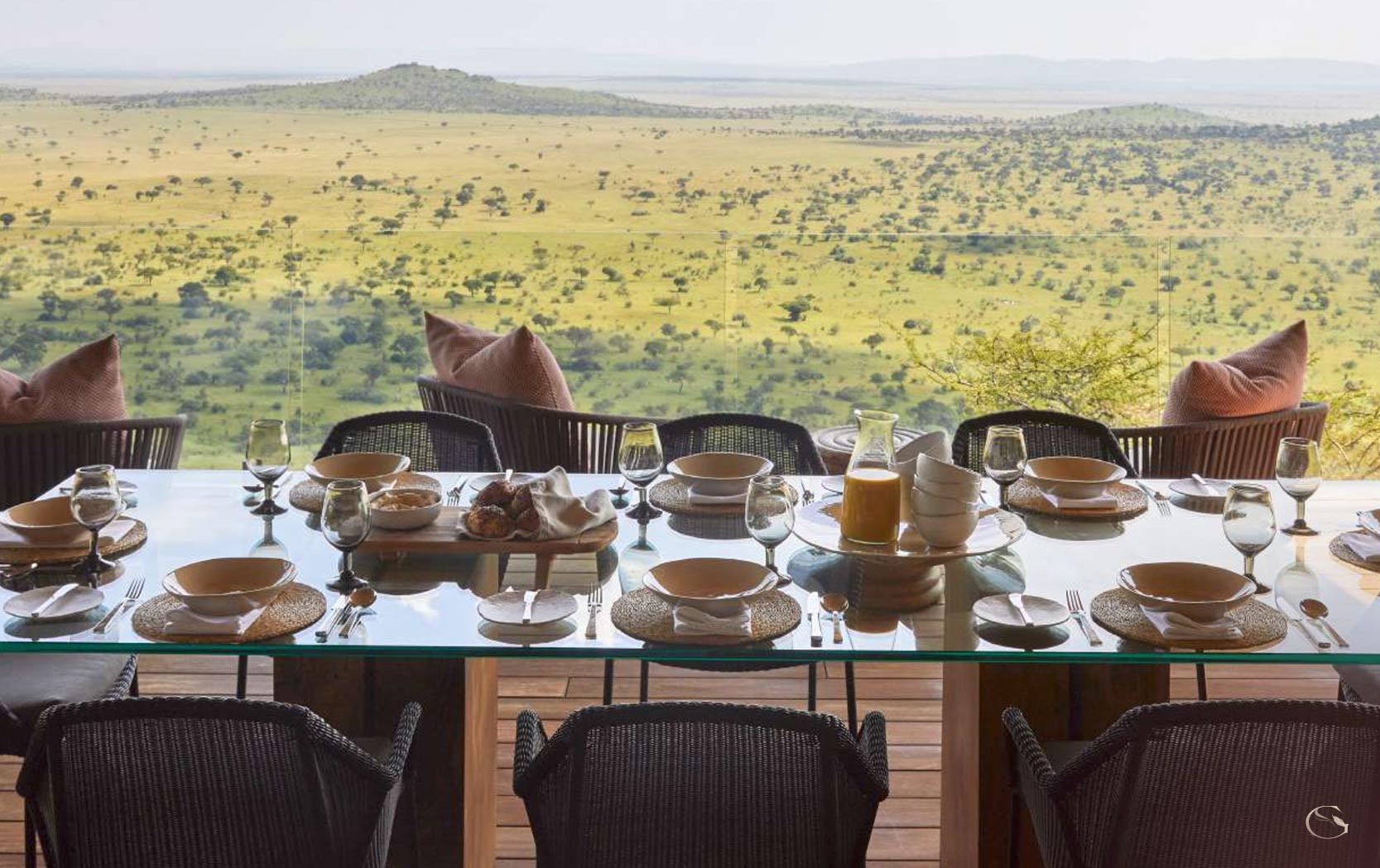

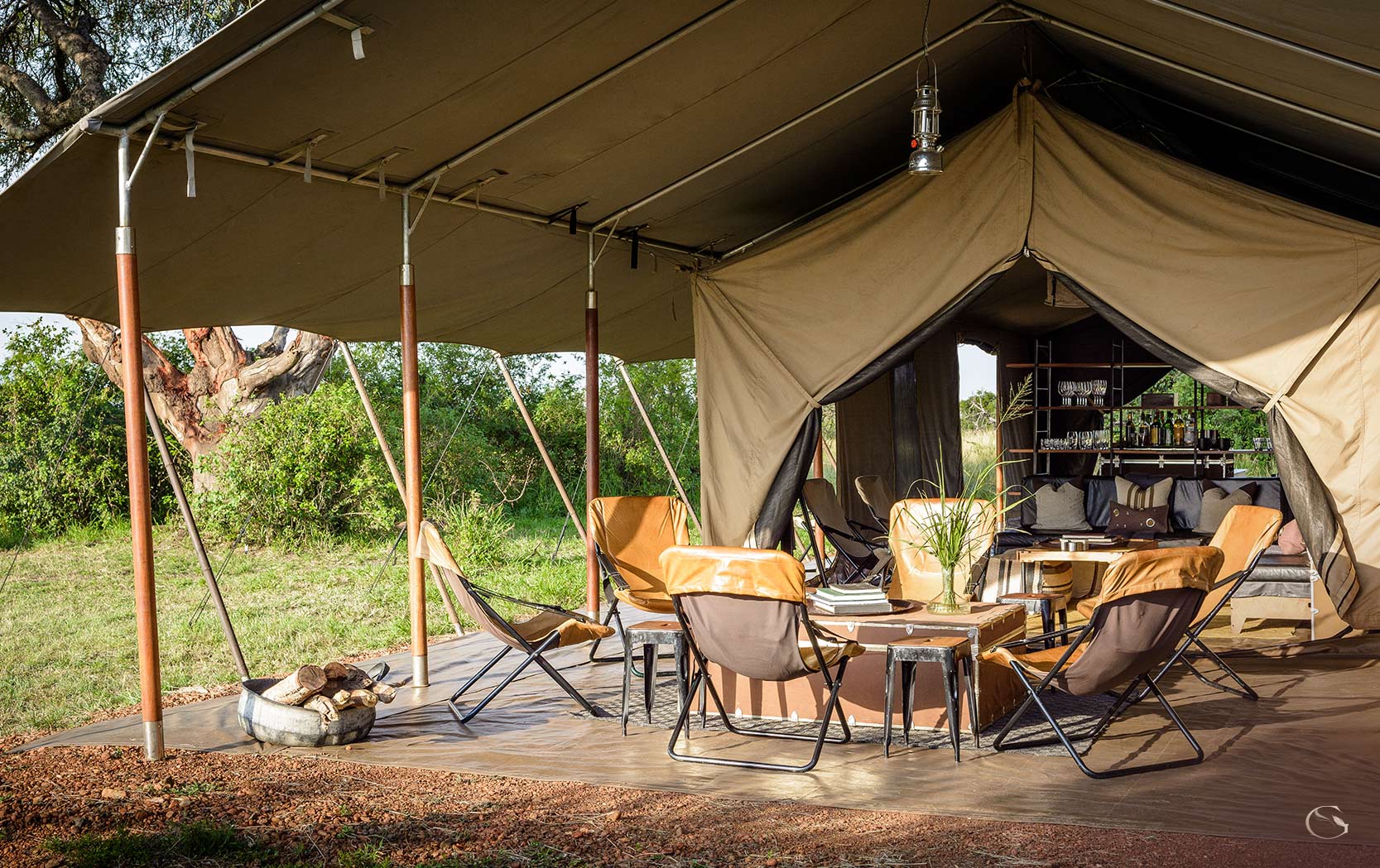
“Two million animals on the move, six hundred miles a year — the plains of the Serengeti stage the greatest wildlife spectacle on Earth”
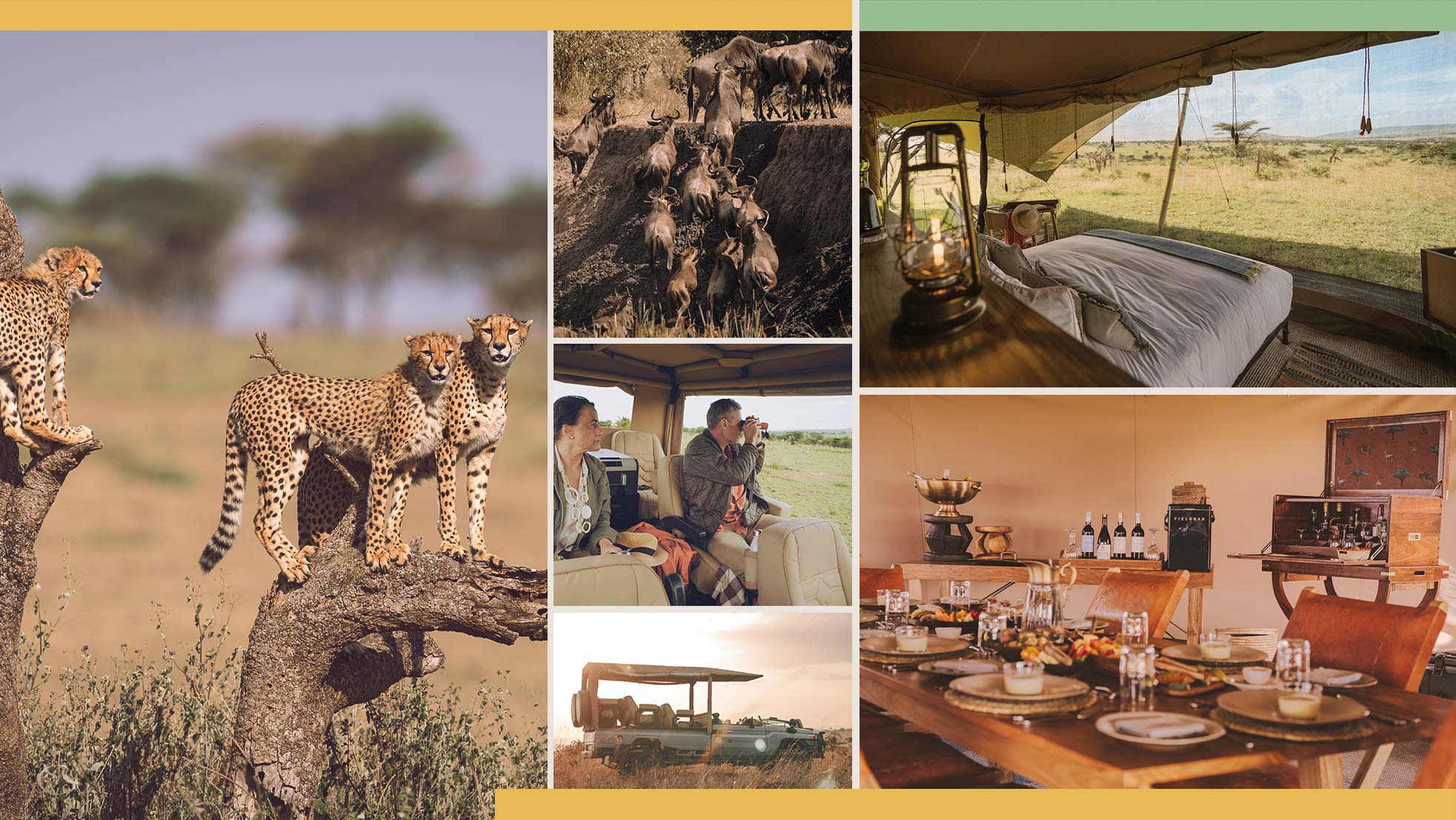
The Serengeti · ~12,000 sq mi
The Serengeti
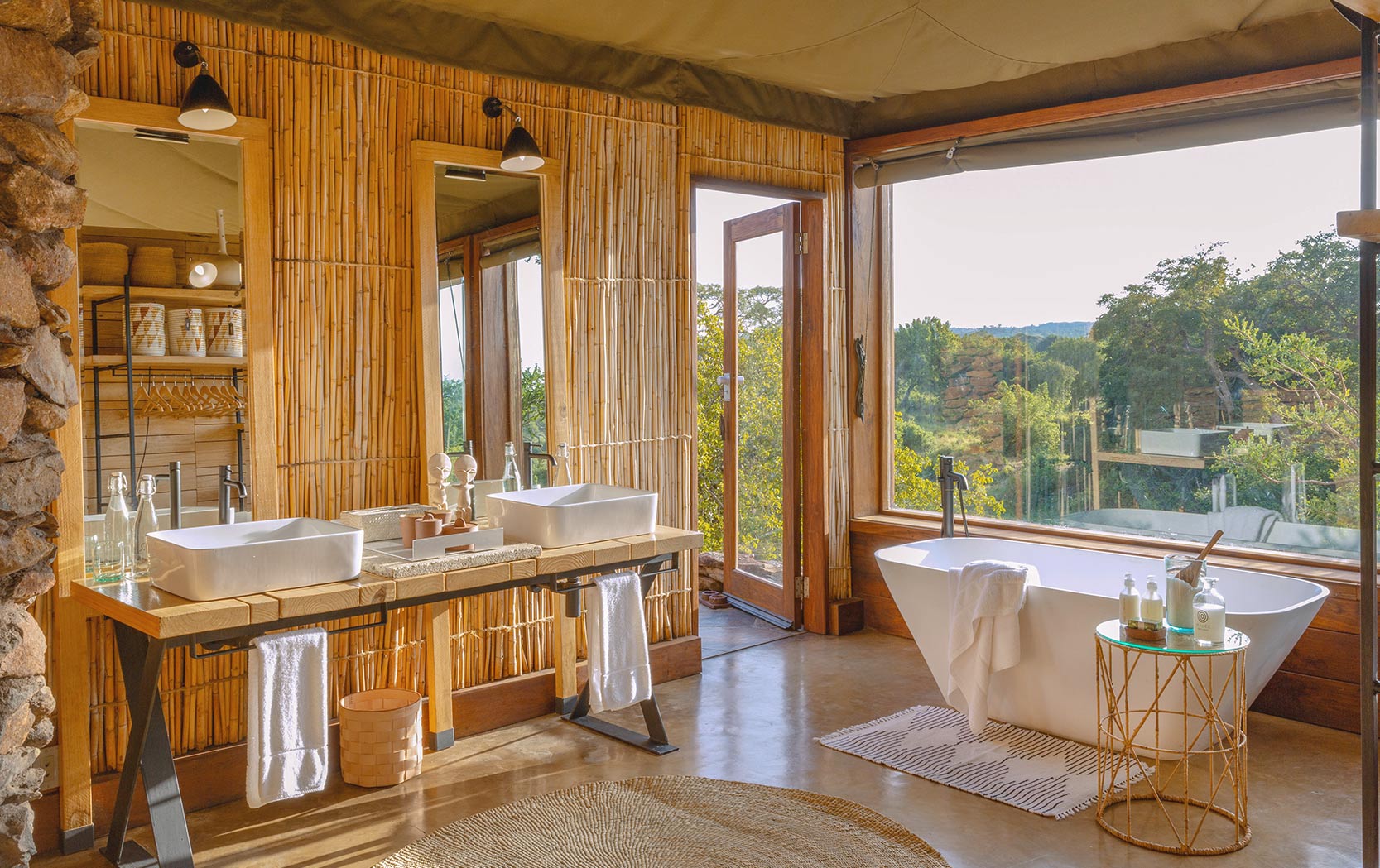
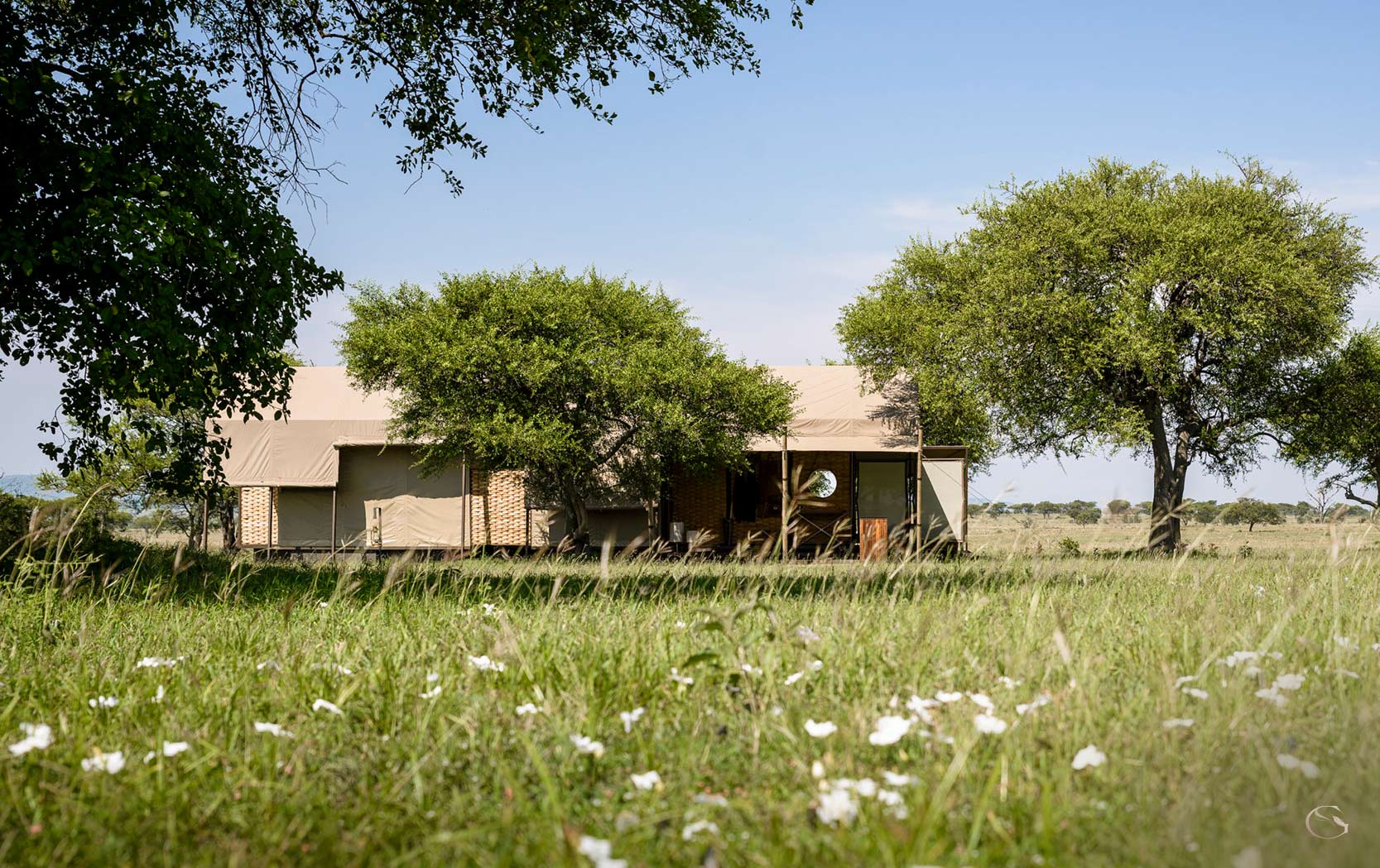
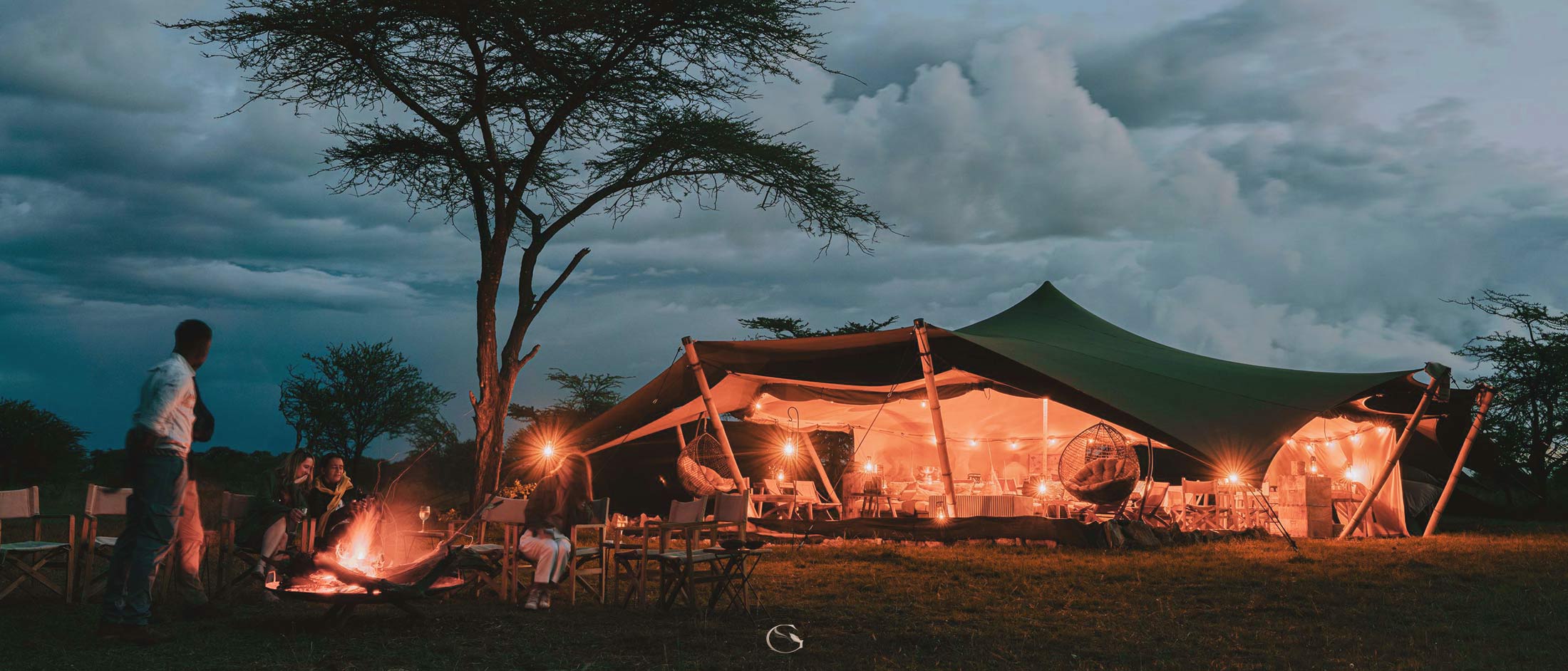
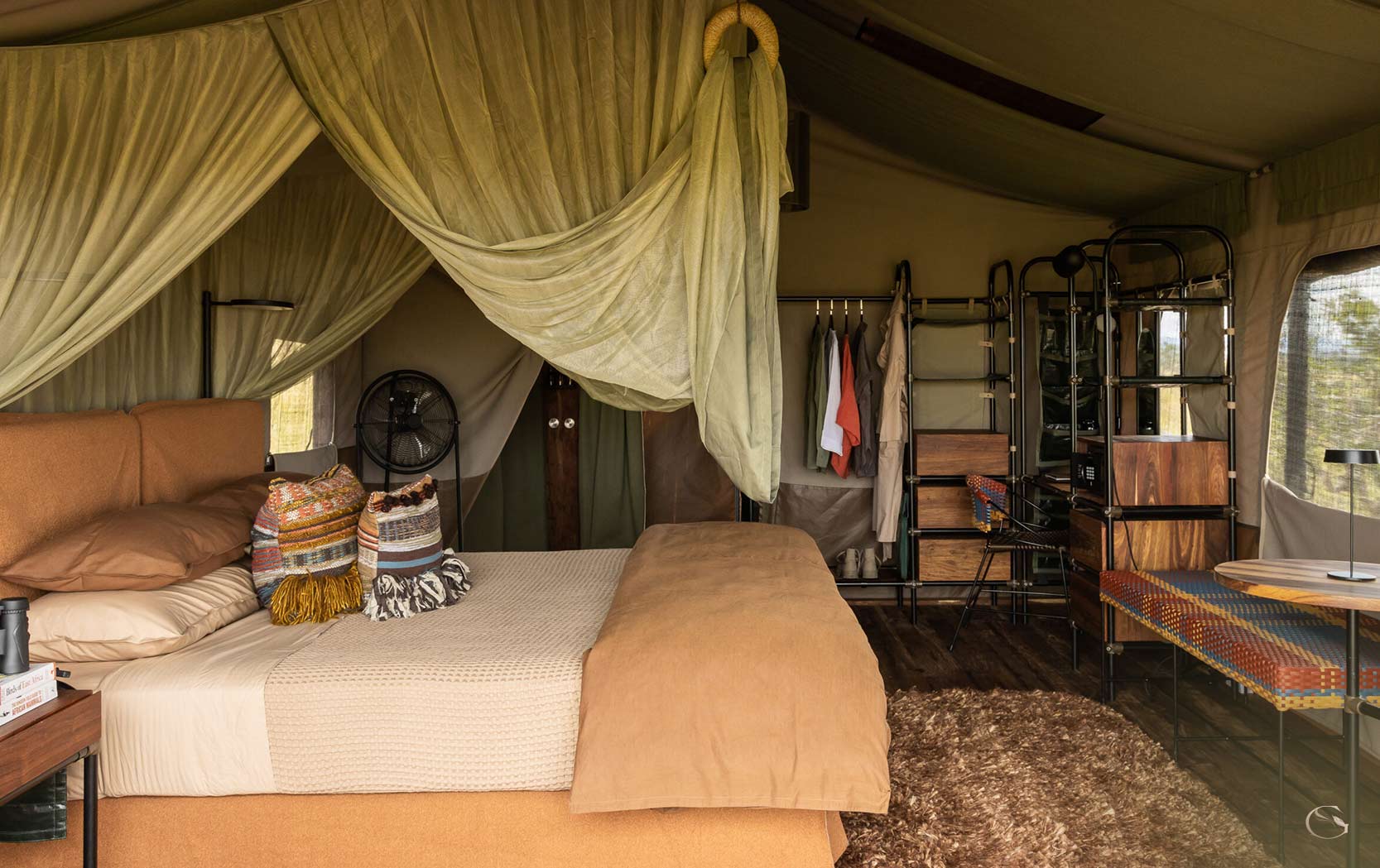
The Maasai called it siringet — the place where the land runs on forever. Tanzania keeps the Great Migration for most of its year. From December the herds gather on the southern short-grass plains below the Ngorongoro highlands, and in the weeks from late January to March more than 300,000 calves are born onto grass kept sweet by old volcanic ash. As the long rains taper, the columns press northwest through the Grumeti — Singita’s 350,000-acre private reserve, where Singita Sabora sets nine tents on the open plain and Singita Explore pitches a private mobile camp for one party at a time. By July the lead herds reach the northern river country: Singita Mara River’s six solar-powered tents stand in the Lamai Triangle, and Wilderness Usawa, a twelve-guest mobile camp, moves with the herds so the spectacle is never more than a morning’s drive away.
“Never have I seen anything like that game. It covered every hill, standing in the openings, strolling in and out among the groves, feeding on the bottom lands, singly, or in little groups. It did not matter in which direction I looked, there it was” — Stewart Edward White, The Rediscovered Country, 1915
“Where the plains give out, the Indian Ocean begins — trade winds, dhow sails, and the scent of cloves over Stone Town”
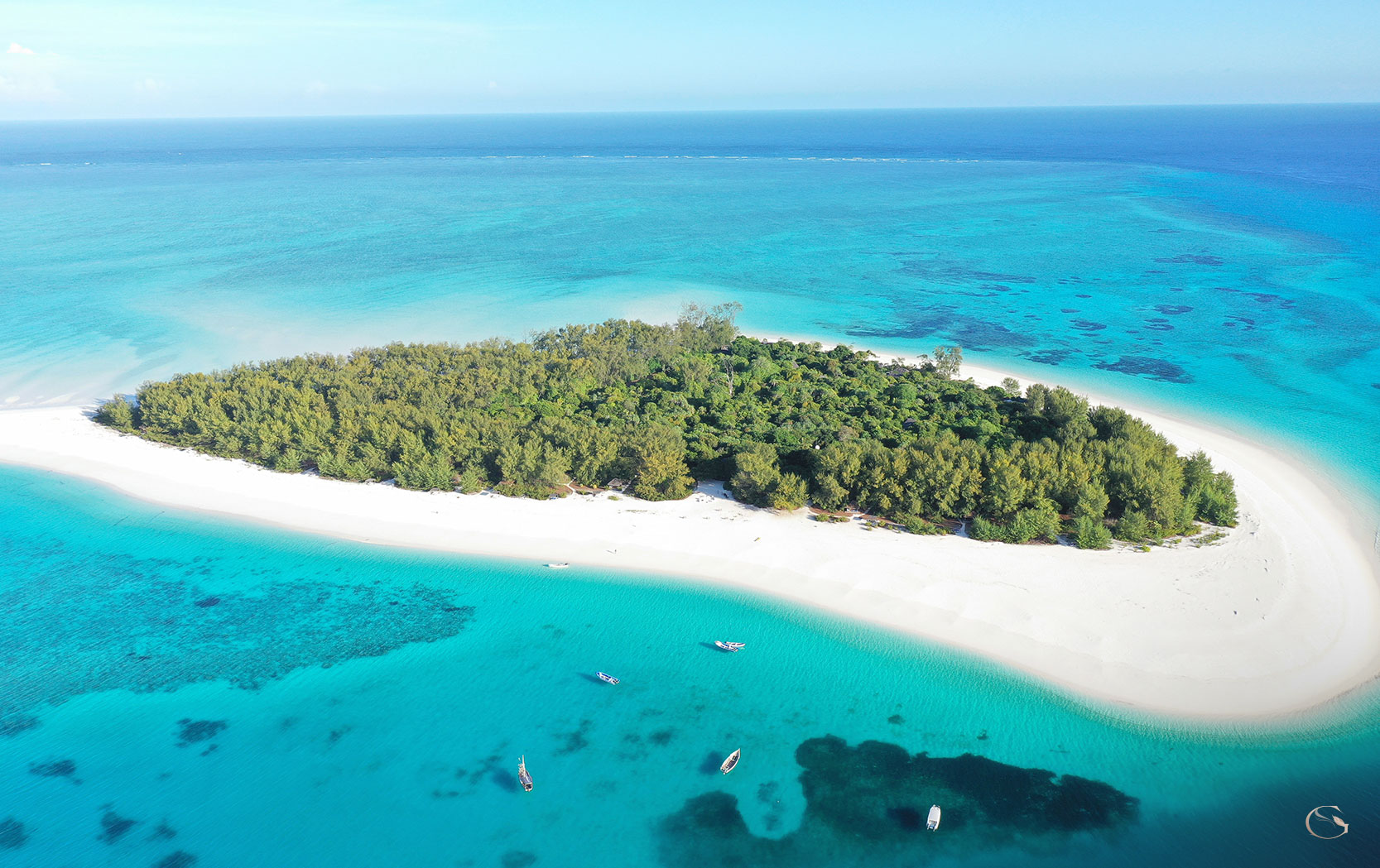
The spice coast · Mnemba Atoll
Zanzibar
Zanzibar has kept the crossroads of the Indian Ocean for a thousand years. Cloves and carved doors, the coral-stone alleys of Stone Town — a UNESCO World Heritage site — and dhows working the turquoise shallows as they always have. Less than three miles off Unguja’s northeastern tip lies Mnemba, a private island ringed by an atoll of coral reef: twelve palm-woven bandas under a beach forest, each drawn in the spiral of a nautilus shell, each opening onto its own stretch of white coral sand.
The fruit, the fish and the lobster sail in daily on ngalawa outriggers; beyond the shallows the reef drops away into some of Africa’s finest dive water. Our Guided Safaris® Chief designers close most Tanzanian Signature journeys here — the plains first, then the sea, with barefoot days measured by the tide.
Earth, sea, and sky, all seemed wrapped in a soft and sensuous repose, in the tranquil life of the Lotus Eaters, in the swoon-like slumbers of the Seven Sleepers, in the dreams of the Castle of Indolence — Richard F. Burton, Zanzibar: City, Island, and Coast, 1872
The seasons
When to go
Tanzania keeps two calendars — the plains and the coast. On the Serengeti, the short rains of November and December pull the herds south to the short-grass plains, where they mass through March; calving peaks in February, the richest predator viewing of the year. The long rains fall from late March through May, green and quiet. June opens the dry season: the migration presses through the Grumeti in June and July — the crossing months of the west — then works the Mara River in the northern Serengeti from July into October, the classic crossing season. On Zanzibar the masika rains fall heaviest in April and May with a shorter burst in November; June to October runs cool and dry on the southern trades, and December to February is hot, bright and clear. Start a conversation with our Guided Safaris® Chief designers — we’ll set both calendars into one journey.
L’Ex-Libris — The 1923 Bookplate · Deboss & Foil
Pressed into the paper.
A bookplate pressed into cotton paper, its title stamped in gold leaf. Move your cursor across the plate: the foil catches the light only at the right angle, exactly as a stamped cover does when you tilt it.
Est. 1995
Guided Safaris®
Luxury Safari Camps
Conservation at the
heart of every journey
30 year legacy
Official Guided Safaris®
Always tailormade
No groups, no set dates
Finest in Africa
Luxury safaris, exclusively