

Seychelles
The Galápagos of the Indian Ocean
The Seychelles are a scatter of some 115 islands off East Africa, and their heart is a cluster of ancient granite peaks — the only mid-ocean islands on earth built of continental rock rather than coral or lava. That deep isolation bred a world of its own: the coco de mer palm of Praslin’s Vallée de Mai, giant tortoises on Aldabra, the Seychelles black parrot, the fairy tern, and reefs where whale sharks pass in season. Beaches of white sand curl between boulders worn to sculpture by the Indian Ocean. Guided Safaris® travels here for the wild islands as much as the famous ones.
“There are places the map keeps to itself — forty granite islands adrift in the Indian Ocean, where the only footprints on the sand each morning are the tide’s and your own”
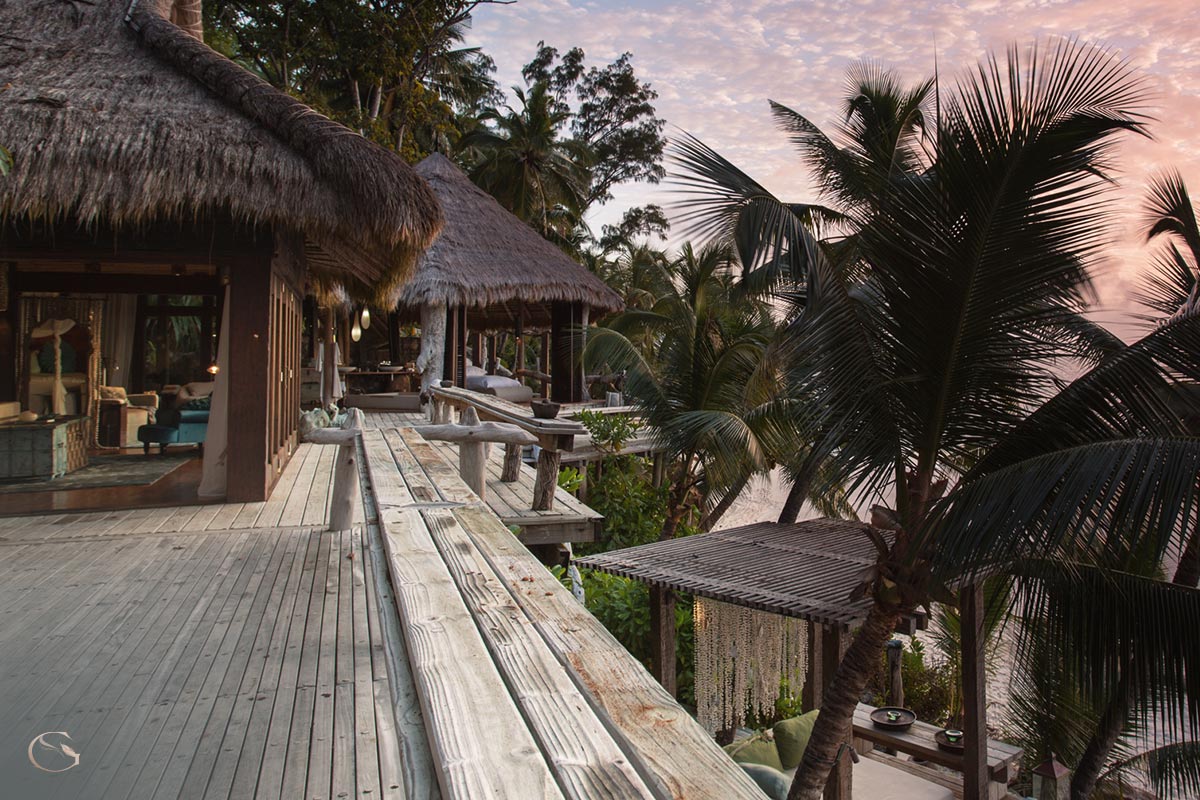
Off Mahé · 201 ha, 11 villas
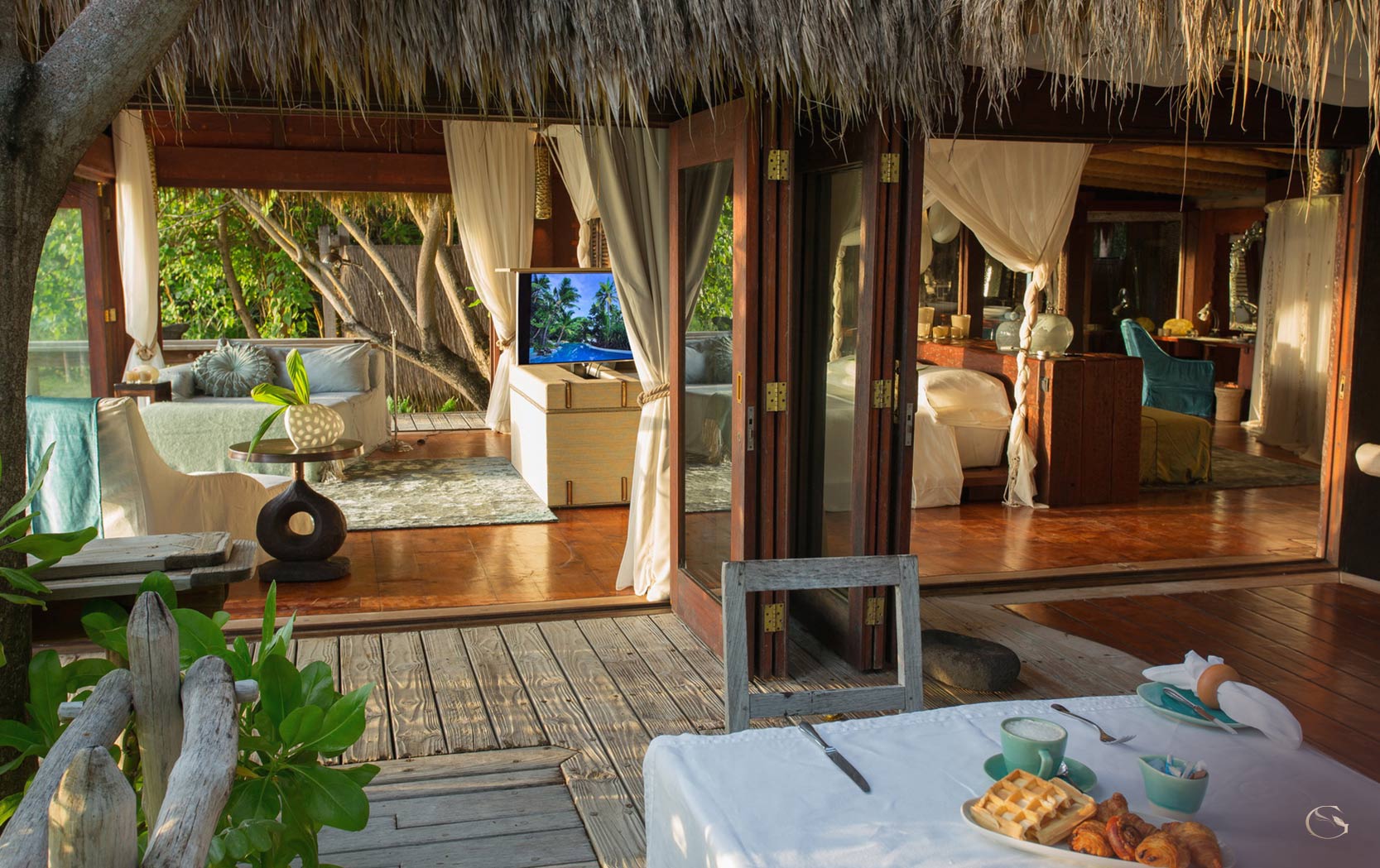
North Island
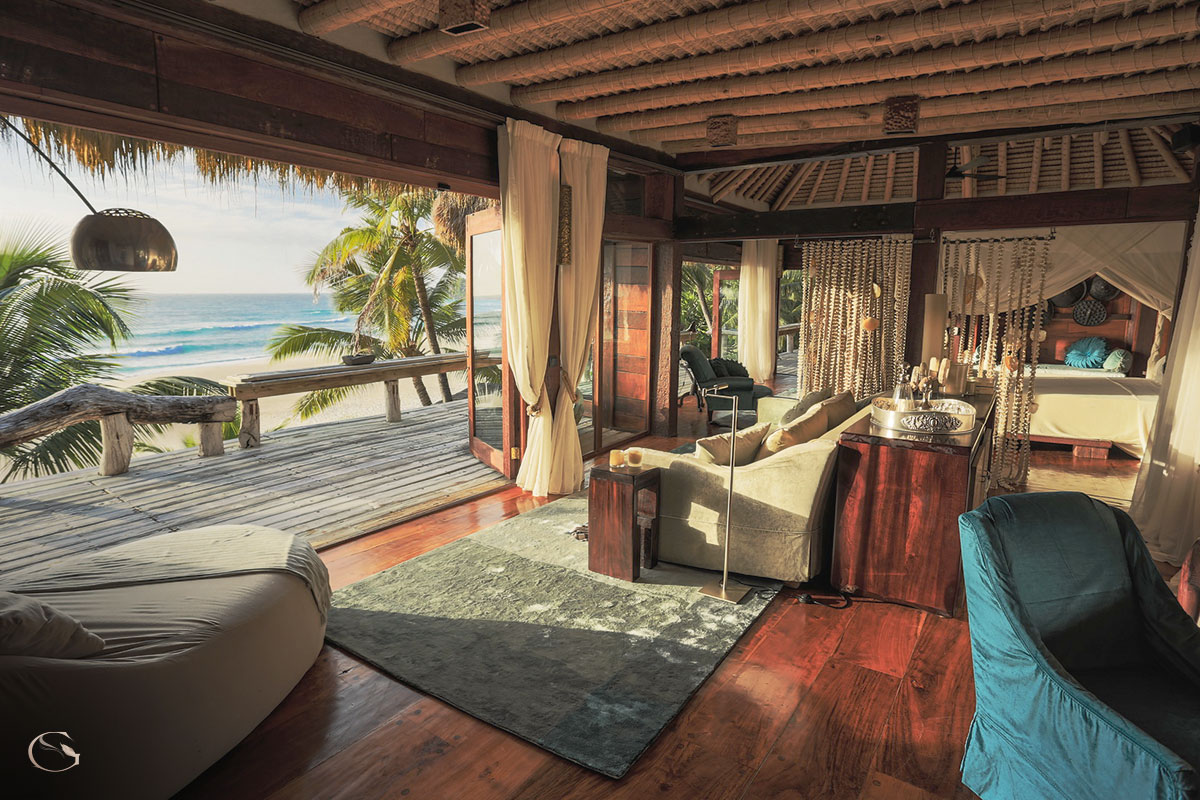
North Island is a rewilding story with a beach for a doorstep. Seventeen miles off Mahé, this 201-hectare granite island — locally Île du Nord — was cleared, farmed, and all but abandoned before its owners set it on a different course. The Noah’s Ark restoration stripped out invasive coconut monoculture and rats, replanted native forest across sixteen habitats, and welcomed back giant tortoises, hawksbill and green turtles, and the island’s own seabirds. Guests share it eleven villas at a time. Each is a barefoot compound of timber and glass set into the takamaka forest, with a private plunge pool, a garden deck open to the sea, and a butler who keeps the whole thing quiet. Guided Safaris® books North Island as a conservation escape first and a resort second.
“…the Government of Mauritius should cause as many of these animals as possible to be collected… transferred to the Mauritius or the Seychelles Islands, where they might be deposited in some enclosed ground, or park belonging to the Government and protected as property of the Colony” — Charles Darwin and fellow naturalists, memorial to the Governor of Mauritius, 1874
Félicité island · 30 pool villas
Zil Pasyon
On Félicité, a granite island east of Praslin, Six Senses keeps thirty pool villas among boulders the sea has worn smooth. Zil Pasyon — Creole for the Islands of Passion — is reached by helicopter or fast boat, and the arrival sets the register: whale-back granite, palm-fringed sand at Grand Anse and Petite Anse, and villas cantilevered into the rock with sundecks facing open ocean. The Six Senses spa is folded between towering boulders; the wine cellars are personal; the pace is deliberate. Félicité is one of the few Seychelles beaches where hawksbill turtles come ashore to nest in daylight.
Our Guided Safaris® Chief designers pair it with North Island for a two-island week — one wild, one polished — and plan every crossing between them so the seas and the schedule agree.
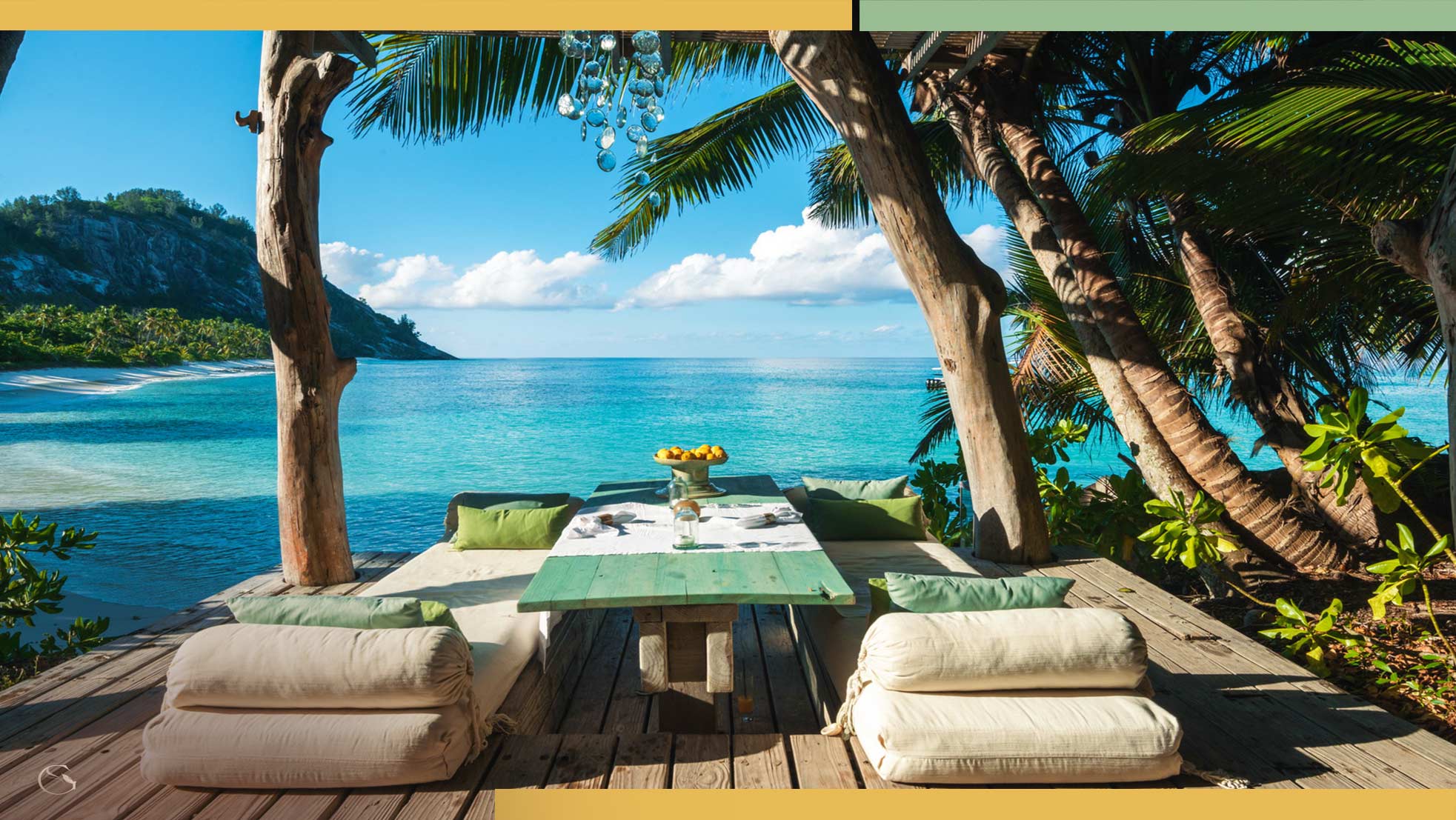
“Slow is the island’s own tempo — a helicopter shadow crossing a lagoon, a table set for two on empty sand, a whole granite coast kept for a single afternoon”
The inner islands · fairy terns & tropicbirds
The birdlife
Seychelles is a seabird country, and its inner granitics keep species found nowhere else on earth. On North Island the all-white fairy tern balances its single egg on a bare branch, while white-tailed tropicbirds — the old sailors’ “boatswain-birds” — trail their long streamers along the cliffs. Wedge-tailed shearwaters burrow in the rocky outcrops; Seychelles blue pigeons and sunbirds, once scarce, are common again; the Seychelles kestrel hunts the forest edge. Offshore lie the endemics’ strongholds — the Aldabra atoll, whose giant tortoises Darwin himself moved to protect in 1874, and Praslin’s Vallée de Mai, home to the black parrot and the coco de mer palm. Guided Safaris® can add a naturalist and a boat to reach the reserves where the rarest birds hold on.
One saw a long stretch of wild mountain coast, and many islands, some 2000 feet below, across which long-tailed boatswain-birds were always flying — Marianne North, Recollections of a Happy Life, 1892
Granite reefs · whale sharks in season
Diving & marine life
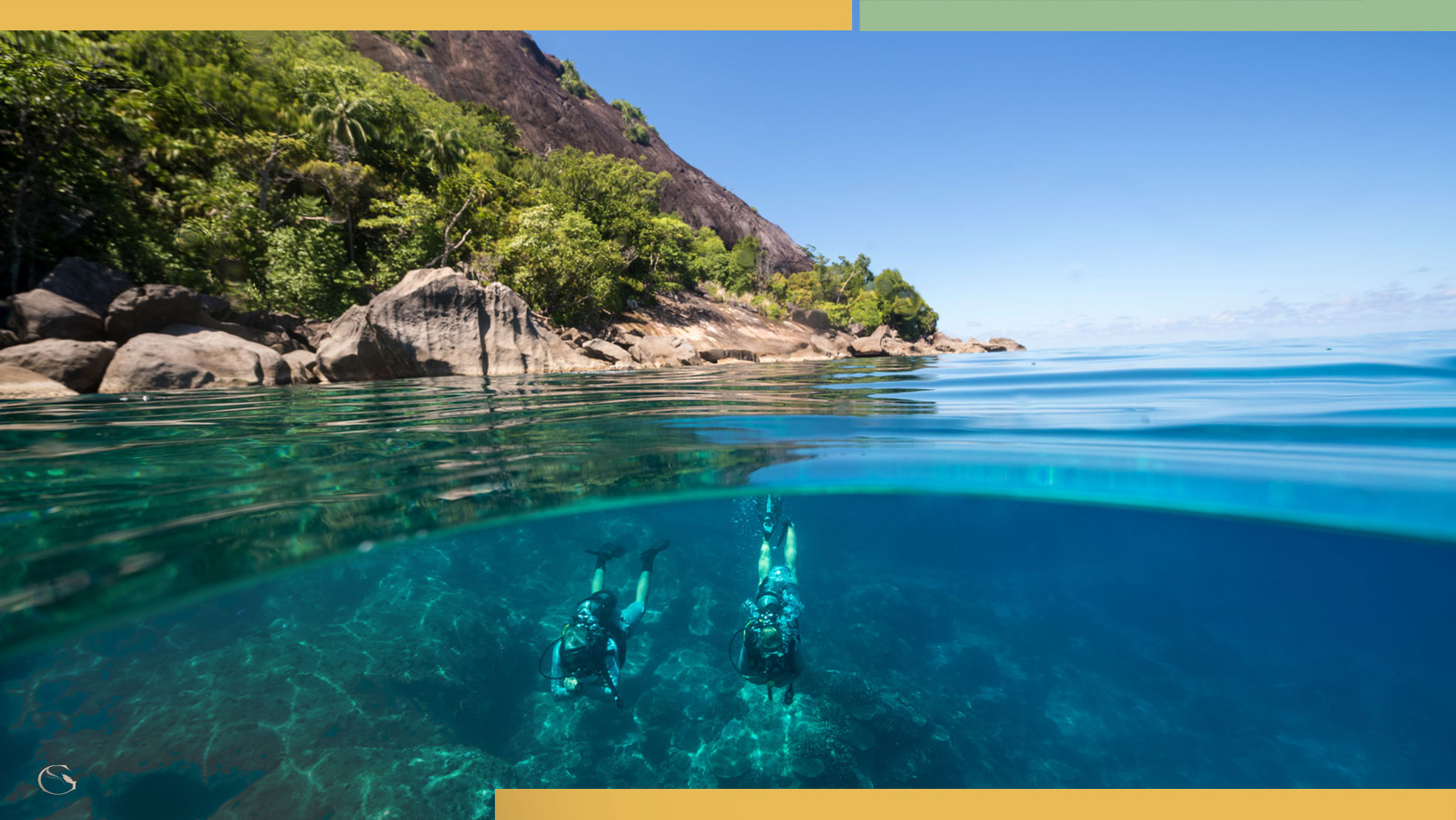
The warm, clear water around the inner islands is a granite-reef world, not a coral-atoll one. Boulders tumble underwater into swim-throughs and canyons, hung with soft corals, sea fans, and sponges, where spotted eagle rays, parrotfish, round ribbontail rays, and white-tip reef sharks work the current. Big pelagic hunters — barracuda, wahoo, and sailfish — patrol the drop-offs. From August to October — September and October the peak — the giant, harmless whale shark passes through on its plankton route, and green and hawksbill turtles are a near-daily sight over the sand. The calmest, clearest windows fall in the April and October changeovers, when the trade winds drop and visibility opens up. Guided Safaris® arranges guided dives, snorkel drifts, and catch-and-release fly-fishing off both islands.
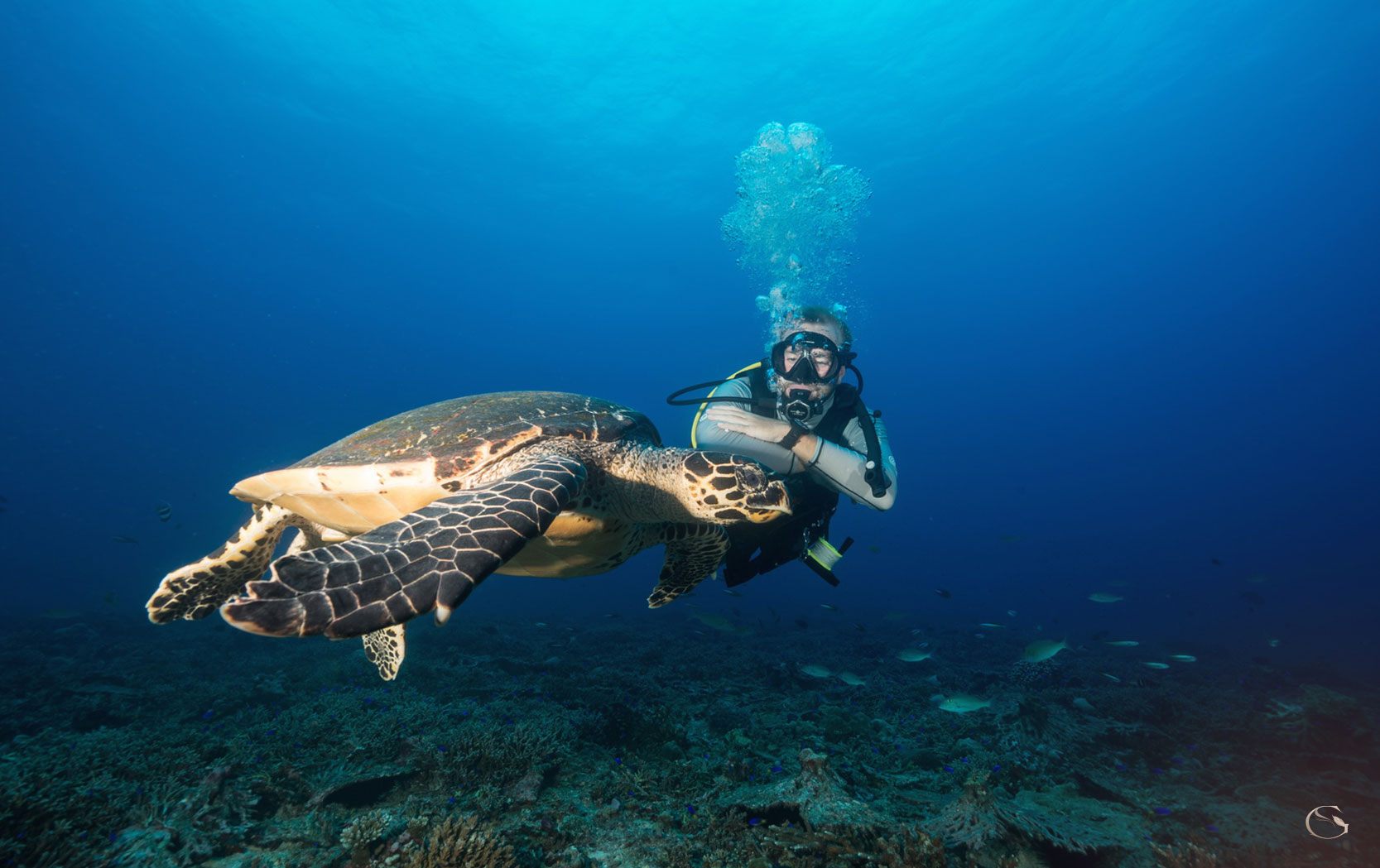
How utterly insignificant are the greatest of these, when compared to these mountains of stone accumulated by the agency of various minute and tender animals — Charles Darwin, The Voyage of the Beagle, 1839
Mahé · Praslin · La Digue
Island hopping
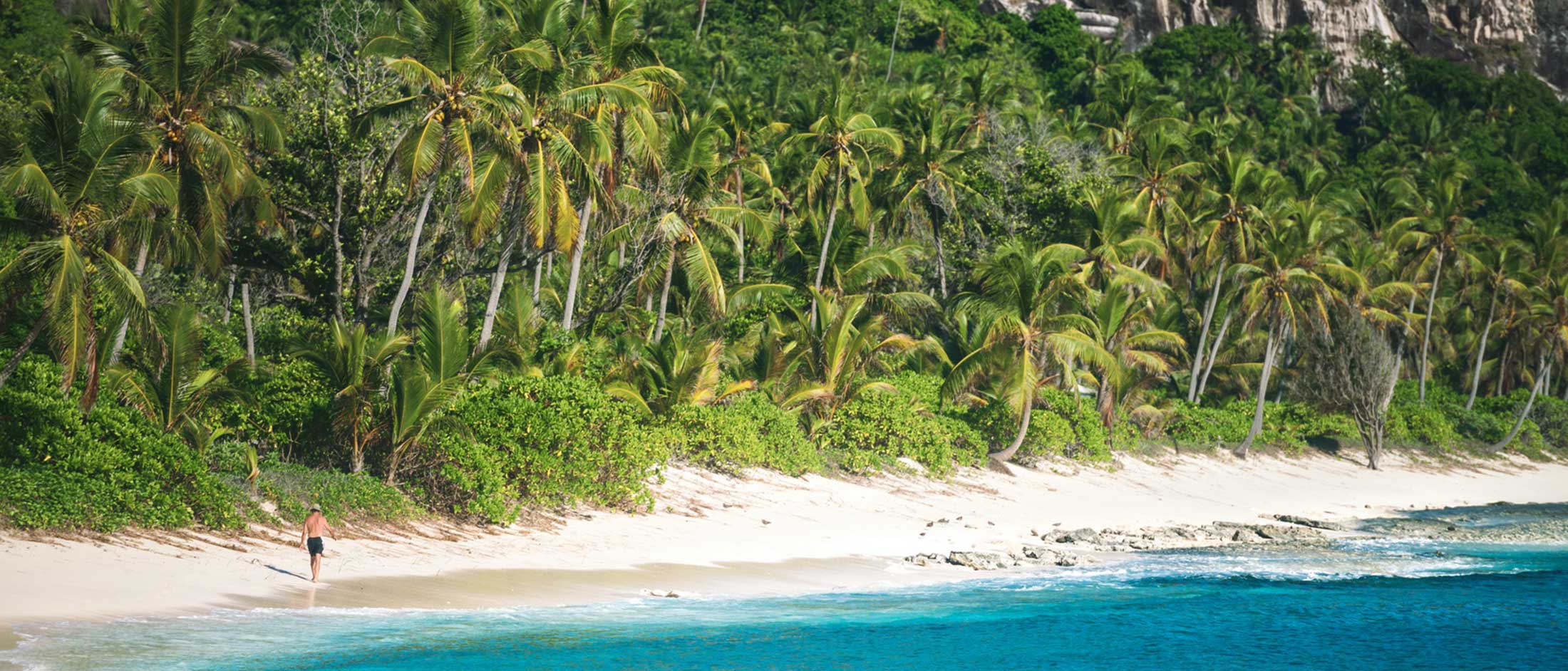
The inner granitics sit close enough to string together in a single trip. From North Island a short helicopter lifts over the reef to Mahé, Praslin, and La Digue — the three main islands — each with its own character: Mahé’s markets and mountain forest, Praslin’s Vallée de Mai and Anse Lazio, La Digue’s ox-carts and the granite theater of Anse Source d’Argent. Between them lie the small private islands, reached by helicopter or fast catamaran, where a whole beach can be yours for an afternoon. Our Guided Safaris® Chief designers chart the hops so the seas and the schedule agree — flat-calm crossings, private transfers, and a day’s picnic on an island with no name on the departure board. It is the Signature way to see more than one Seychelles.
The seasons
When to go
The Seychelles sit just south of the Equator and stay warm all year, roughly 24 to 32°C. Two wind seasons set the rhythm. The northwest monsoon runs November to March — hotter and more humid, with short heavy downpours and generally calmer seas; December and January are the wettest weeks. The southeast trade winds blow May to September — cooler, drier, and breezier, with clear skies and firmer surf, the classic beach and sailing season. The two changeover months, April and October, are the prize: light winds, glassy water, and the best underwater visibility of the year. Whale sharks pass the granitic islands from August to October, peaking in September and October, and hawksbill turtles nest on the beaches from around October to February. Start a conversation with our Guided Safaris® Chief designers, who have tried every island and season, and we’ll time your Signature crossing to the calmest water.
L’Ex-Libris — The 1923 Bookplate · Deboss & Foil
Pressed into the paper.
A bookplate pressed into cotton paper, its title stamped in gold leaf. Move your cursor across the plate: the foil catches the light only at the right angle, exactly as a stamped cover does when you tilt it.
Est. 1995
Guided Safaris®
Luxury Safari Camps
Conservation at the
heart of every journey
30 year legacy
Official Guided Safaris®
Always tailormade
No groups, no set dates
Finest in Africa
Luxury safaris, exclusively